
Loading...
Serving Salina, KS and surrounding areas. (785) 201-9750
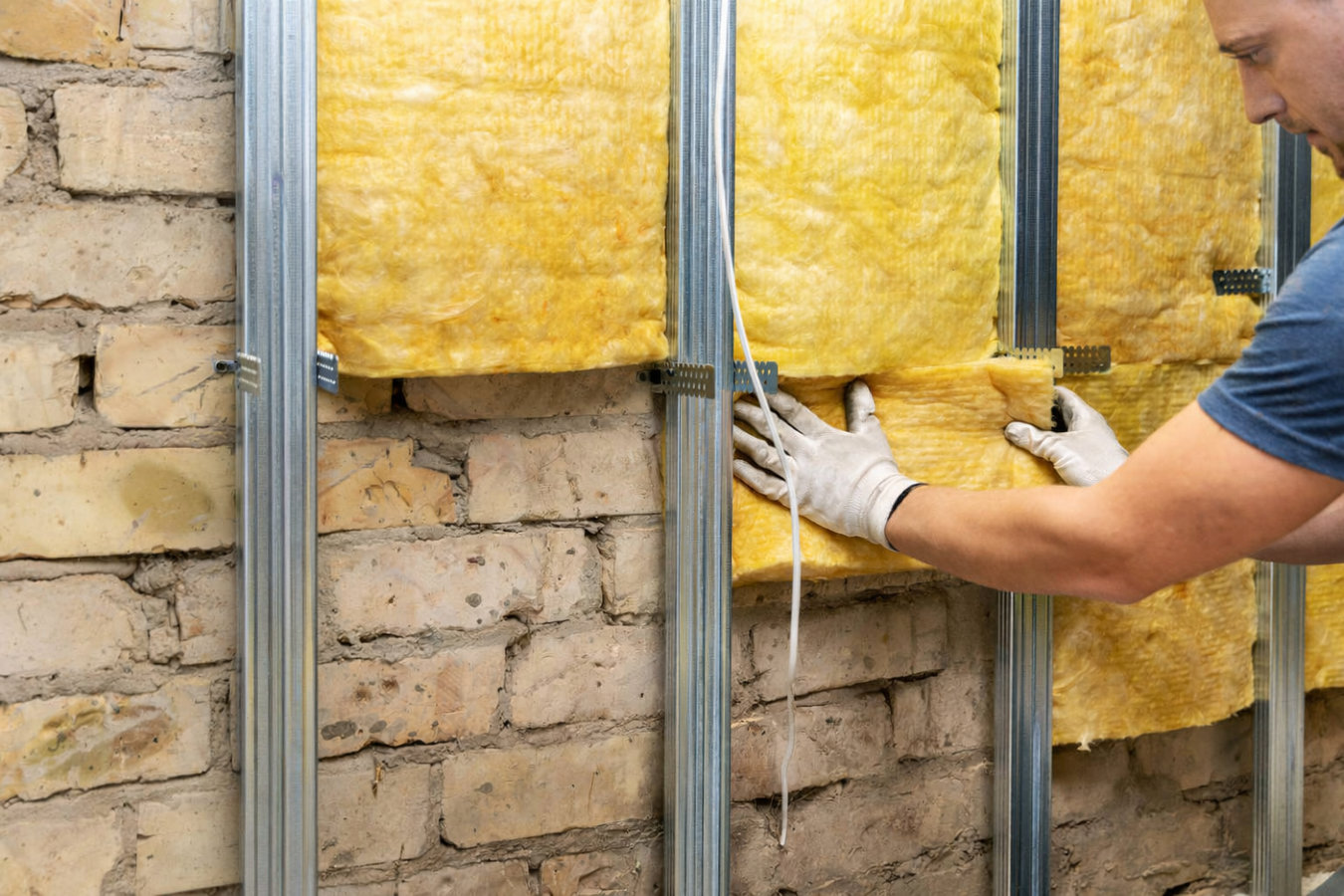
Cold floors, high heating bills, and musty smells all point to the same problem. We insulate basements throughout Salina so your home stays comfortable and your HVAC system stops working overtime.
Basement insulation in Salina creates a thermal barrier between your living space and the cold, damp air that collects below ground - most jobs cover basement walls, the rim joist, or the ceiling assembly in one to two days. Without that barrier, cold air migrates up through your floors, and your furnace runs longer trying to compensate.
For Salina homeowners - especially those in older homes built before the 1980s - the basement is often the single biggest source of heat loss in the entire house. Cold floors in January are not just uncomfortable. They are a sign your energy dollars are going straight outside. If you have also looked into closed-cell foam insulation, that option pairs well with basement wall work because it handles moisture at the same time.
The U.S. Department of Energy estimates that proper basement insulation can reduce total home heating and cooling costs by a meaningful amount, often 10 to 20 percent, depending on how poorly the space was insulated before. In a Kansas climate with hard winters and hot summers, that adds up in both directions.
If your first floor feels noticeably cold underfoot near the edges of rooms above the basement, heat is escaping through an uninsulated or poorly insulated basement ceiling. In Salina winters that drop into the teens, an uninsulated basement lets cold air work upward no matter how hard your furnace runs.
If similar-sized homes nearby are paying noticeably less to heat and cool their houses, your basement is one of the first places to look. An uninsulated basement is one of the biggest sources of energy loss in older Salina homes, and the fix is often more straightforward than homeowners expect.
Salina summers are humid, and when warm outdoor air meets the cool surface of an uninsulated basement wall, condensation forms. Over time, that moisture creates the conditions for mold and a familiar earthy smell. The right insulation, properly installed, can reduce that condensation at the source.
If your basement smells earthy or damp after Salina's heavy spring rains, that moisture needs to be addressed before insulation goes in - but the smell itself is a clear sign the space is not properly sealed. Kansas clay soils hold water close to foundations, making this a common complaint in older neighborhoods.
We insulate basement walls, rim joists, and ceiling assemblies using materials chosen for Kansas moisture conditions. For finished basements or spaces being finished, we typically install rigid foam boards or spray foam directly against the concrete or block walls before framing goes up. For unfinished basements where the priority is keeping heat in the floors above, we insulate the ceiling of the basement - the underside of your first floor - with batts or blown-in material. If you are interested in how closed-cell foam insulation performs compared to other options for basement walls, we can walk you through the specifics during your estimate.
Rim joist insulation is one of the highest-impact improvements in older Salina homes. The rim joist sits where your foundation meets the wood framing of your first floor, and it is one of the most common places for cold air to enter. Sealing and insulating that band of wood can make a noticeable difference by itself. If you also want to address moisture or air movement in areas below the basement floor, pairing this work with crawl space insulation is worth considering for homes that have both.
Best for finished basements or homes where heating the below-grade space is the goal.
Best for older Salina homes losing heat at the critical junction between foundation and wood frame.
Best for unfinished basements where the priority is protecting the living floors above from cold.
Salina sits in north-central Kansas, where the difference between the coldest and hottest days of the year can exceed 100 degrees. That swing puts constant stress on your home's thermal envelope in both directions. Insulation that might be adequate in a milder climate needs to be installed more thoroughly here to actually reduce your bills. A large share of Salina's housing stock was built in the 1950s and 1960s, when basement insulation was rarely included in original construction - so if your home is more than 40 years old, there is a good chance your basement has little or no insulation at all.
Kansas clay soils add another layer of complexity. The soil swells when wet and shrinks when dry, and over years that movement can open small cracks in basement walls. Those cracks become entry points for both cold air and moisture, and they should be addressed before insulation goes in. Homeowners in Abilene and McPherson deal with the same soil conditions and housing stock challenges - it is a regional issue, not specific to one neighborhood.
For soil and moisture guidance relevant to this region, see the U.S. Department of Energy basement insulation guide and the Building Science Corporation basement guide.
We will ask a few short questions about your home's age, whether your basement is finished, and what problem you are trying to solve. You do not need measurements or technical details ready. We reply within 1 business day.
We walk your basement, check the walls and ceiling, look for moisture or cracks, and measure the areas to be covered. This visit usually takes 30 to 60 minutes and comes with a written estimate - no obligation.
Most basement jobs in an average Salina home take one to two days. You can stay home during the work. We will tell you exactly what to move beforehand - we handle all the prep and cleanup.
We walk you through the finished job before we leave so you can see what was done and ask questions. If a permit was required, we coordinate any inspection - you do not need to manage that step.
We will walk your basement in person and give you a written estimate with no obligation. Most Salina homeowners hear back within 1 business day.
(785) 201-9750Installing insulation over a moisture problem is one of the most common contractor mistakes in Kansas basements. We check for wall cracks, condensation, and water intrusion during every assessment - before recommending any materials. You will not pay to cover up a problem that will keep getting worse.
Salina has a high concentration of mid-century homes with full basements that were never insulated at the time of construction. We have worked in these homes consistently and know the specific challenges - concrete block walls, aging rim joists, and soil movement - that show up in this housing type.
Not every insulation type performs equally well in a Kansas basement. We use rigid foam boards and spray foam where moisture resistance matters, and we recommend fiberglass batts only in applications where they make sense. The right material depends on your specific basement - we explain the reasoning, not just the price.
The City of Salina requires permits for certain insulation work, and we handle that process from start to finish. The work gets inspected and documented, which protects your home when you sell. See the City of Salina Building Services for permit requirements.
Every job starts with a thorough walkthrough - not a quick glance and a number. We combine that local knowledge with materials that are right for Kansas conditions, so the insulation performs the way it is supposed to for years, not just the first winter.
Dense, moisture-resistant closed-cell foam applied to basement walls, rim joists, and crawl space foundations.
Learn moreInsulation and air sealing for crawl spaces - addressing the cold floors and moisture issues common in Salina homes.
Learn moreCold floors and high heating bills are fixable. Call us or request a free estimate online - we book fast as the weather turns.