
Loading...
Serving Salina, KS and surrounding areas. (785) 201-9750
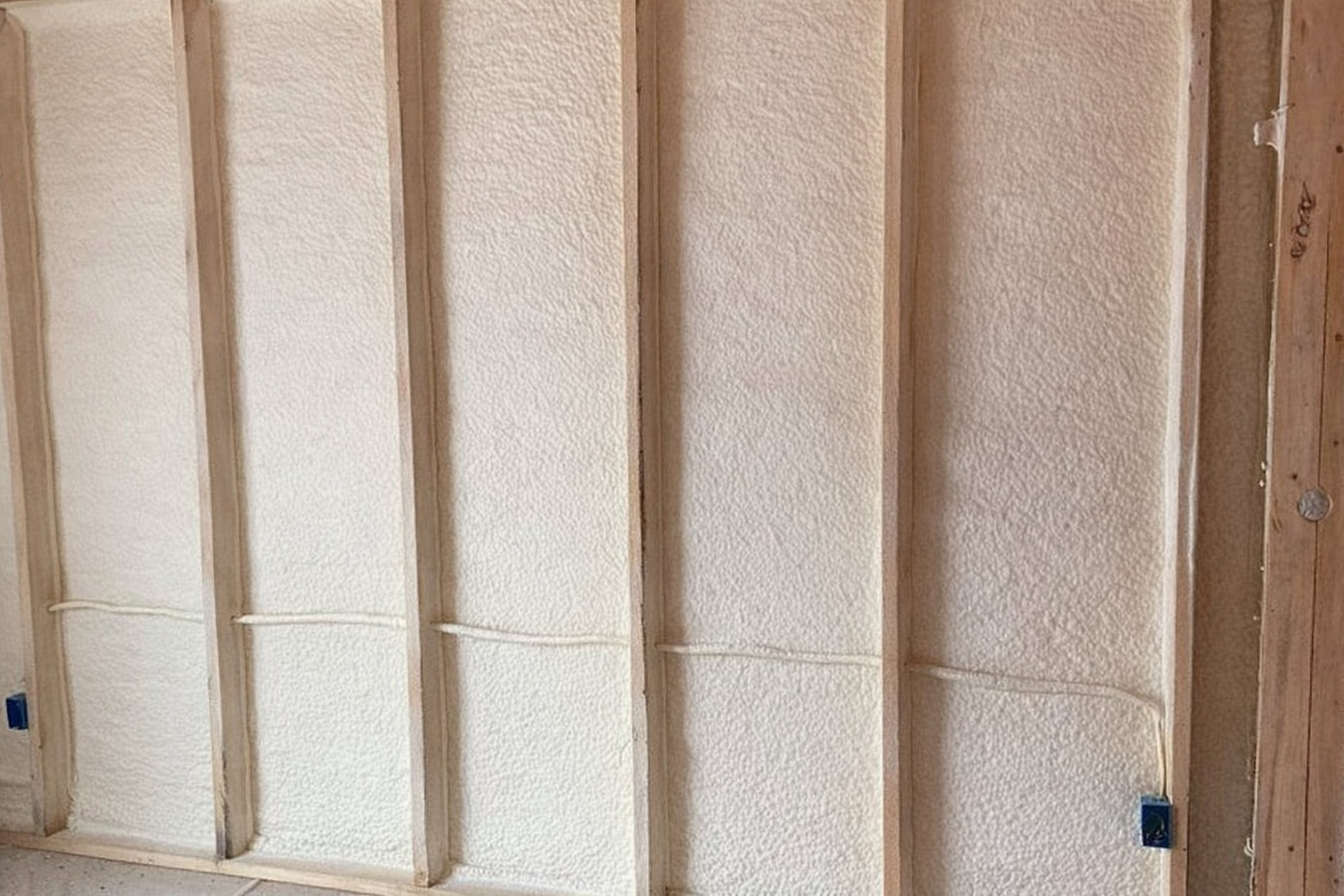
Kansas wind and temperature swings demand more from your insulation than most materials can deliver. Closed-cell foam insulates and seals in one application - no gaps, no drafts, no moisture working its way through your walls.
Closed-cell foam insulation in Salina is a two-part spray-applied product that expands, hardens, and seals air gaps at the same time it insulates - most residential jobs covering a crawl space, rim joist, or attic are completed in a single day. Unlike fiberglass batts or blown-in insulation, which only slow heat transfer, closed-cell foam physically blocks air movement and resists moisture at the same time.
For Salina homeowners dealing with drafts, high energy bills, or moisture in below-grade spaces, closed-cell foam addresses all three problems in one application. It has one of the highest insulating values per inch of any material available, which matters in a climate where winters can push below zero and summers regularly top 100 degrees. If you are comparing options and want to understand how open-cell foam insulation compares - specifically where each type makes more sense - that is worth covering during your estimate.
Closed-cell foam is not a DIY product. It requires trained installers with specialized spray equipment, and the installation involves chemicals that need proper ventilation during and after application. The Spray Polyurethane Foam Alliance sets training and quality standards for contractors working with this material.
If your gas or electric bills have gone up noticeably over the past few winters or summers - and your habits have not changed - your insulation may be settling or failing. In Salina's climate, where your HVAC system works hard for eight or nine months a year, underperforming insulation shows up quickly on utility bills.
Kansas wind is relentless. Hold your hand near an electrical outlet on an exterior wall during a cold, windy day - if you feel a draft, air is moving through your walls. Closed-cell foam expands to fill those gaps as it cures, stopping the draft at the source rather than just slowing it down.
A musty smell in your crawl space or basement is often the first sign that moisture is getting in and sitting there. Salina's clay soils hold water close to foundations, and uninsulated crawl spaces are a common source of moisture problems. Closed-cell foam seals and resists moisture at the same time - it is the right material for this application.
If your home is more than 40 years old and has never had a full insulation assessment, there is a good chance it is performing well below current standards. Many Salina homes from this era have no wall insulation at all and only a few inches in the attic - levels that were considered acceptable then but fall far short of what Kansas winters demand now.
We install closed-cell foam in crawl spaces, basement walls, rim joists, attic roof decks, and exterior wall assemblies. Each application uses the same material but requires different techniques and thicknesses depending on the location and what the building code requires for Salina's climate zone. Crawl space and rim joist work is where this material provides the clearest advantage - moisture resistance and air sealing in one pass. For homeowners who want to cover an interior attic floor or walls where vapor permeability is acceptable, open-cell foam insulation is worth comparing since it typically costs less for those specific applications.
For full spray foam insulation projects - where an entire attic, basement, and crawl space are addressed together - we assess the whole home and choose the right foam type for each area. Some locations benefit from closed-cell's density and moisture resistance, while others are well served by open-cell's cost profile and acoustic performance. We explain the reasoning for each recommendation before you commit to anything.
Best for Salina homes with moisture risk, clay-soil movement, or fiberglass batts that have failed between joists.
Best for older homes losing heat at the critical band between the foundation and first-floor framing.
Best for homes needing maximum performance per inch in tight or shallow spaces.
Salina sits in north-central Kansas, a climate zone that demands high insulation performance. Winter lows regularly drop into the single digits, and summer highs frequently exceed 100 degrees. That 100-plus-degree seasonal swing puts enormous stress on any insulation system. Closed-cell foam's high insulating value per inch means a thinner layer does more work than a thicker layer of traditional insulation - which matters when you are retrofitting a space that was not designed with insulation in mind. Kansas is also one of the windiest states in the country, and wind-driven air infiltration is a major source of heat loss that traditional insulation alone cannot stop.
Many of Salina's established neighborhoods - particularly those built before the 1980s - have homes where closed-cell foam is the most practical way to address the walls and crawl spaces that were never properly insulated. The housing stock in Abilene and Hutchinson faces the same era of construction and the same regional climate - older homes throughout central Kansas share these insulation gaps. Closed-cell foam can be applied to concrete walls, wood framing, and existing assemblies without tearing things apart, which is why it works so well as a retrofit solution in this part of the state.
For climate zone and R-value guidance relevant to Salina, see the DOE insulation recommendations by climate zone.
Tell us what part of your home you want to insulate and what problem you are trying to solve. We will ask a few basic questions to understand the scope. You do not need measurements or technical details. We reply within 1 business day.
We come to your home, check the current insulation condition, look for moisture issues, and measure the areas to be covered. This visit takes 30 to 60 minutes and produces a written, itemized estimate - no obligation, no pressure.
You will need to be out of the treated space for at least 24 hours after the foam is applied while it cures. We give you a specific re-entry time before work begins. For most jobs, the rest of your home is not affected.
Once the foam has cured and the crew has cleaned up, we walk you through the finished job. You should see an even, solid layer with no gaps or thin spots. This is your chance to ask questions and verify the work matches the estimate.
We come to your home, assess the space in person, and give you a real number - no guesswork, no obligation. Most homeowners hear back within 1 business day.
(785) 201-9750Closed-cell foam requires precise chemical mixing ratios and proper application temperatures to cure correctly. Our installers follow Spray Polyurethane Foam Alliance best practices and use professional-grade equipment - not contractor-grade cans from a hardware store. The difference shows up in even coverage and a finished product that performs the way it is supposed to.
We have worked on the pre-1980 housing stock that makes up a large part of Salina's residential neighborhoods. Retrofit spray foam applications in older homes require different approaches than new construction - the spaces are tighter, the existing assemblies are mixed, and the surprises are more common. That hands-on experience in the local housing stock is not something you develop working only on new builds.
One of the most common concerns homeowners have with spray foam is not knowing when it is safe to return. We give you a specific re-entry time before the crew starts work - not a vague estimate at the end of the day. For households with children, pets, or anyone with respiratory sensitivities, we make sure that question is answered clearly in advance.
For projects that require a permit through the City of Salina, we handle the paperwork and coordinate any required inspections. The work gets inspected and documented - which protects your home when you sell. For what triggers a permit requirement, see the City of Salina Building Services page.
Every estimate starts with an in-person assessment - not a number guessed over the phone. We pair that with honest recommendations about which foam type fits which application, so you get the right solution for your home rather than the most expensive one.
A lower-cost spray foam option suited for interior walls and attics where vapor permeability is acceptable.
Learn moreOverview of both spray foam types - open-cell and closed-cell - with guidance on which suits each application.
Learn moreSchedules fill quickly in fall. Call now or request a free estimate online and we will get you on the calendar before the cold weather sets in.